The Thermodynamics of Not Wasting Anything
Follow the second law through the energy cascade — gas to electricity to compute to heat — and co-location stops being a virtue and becomes a necessity.
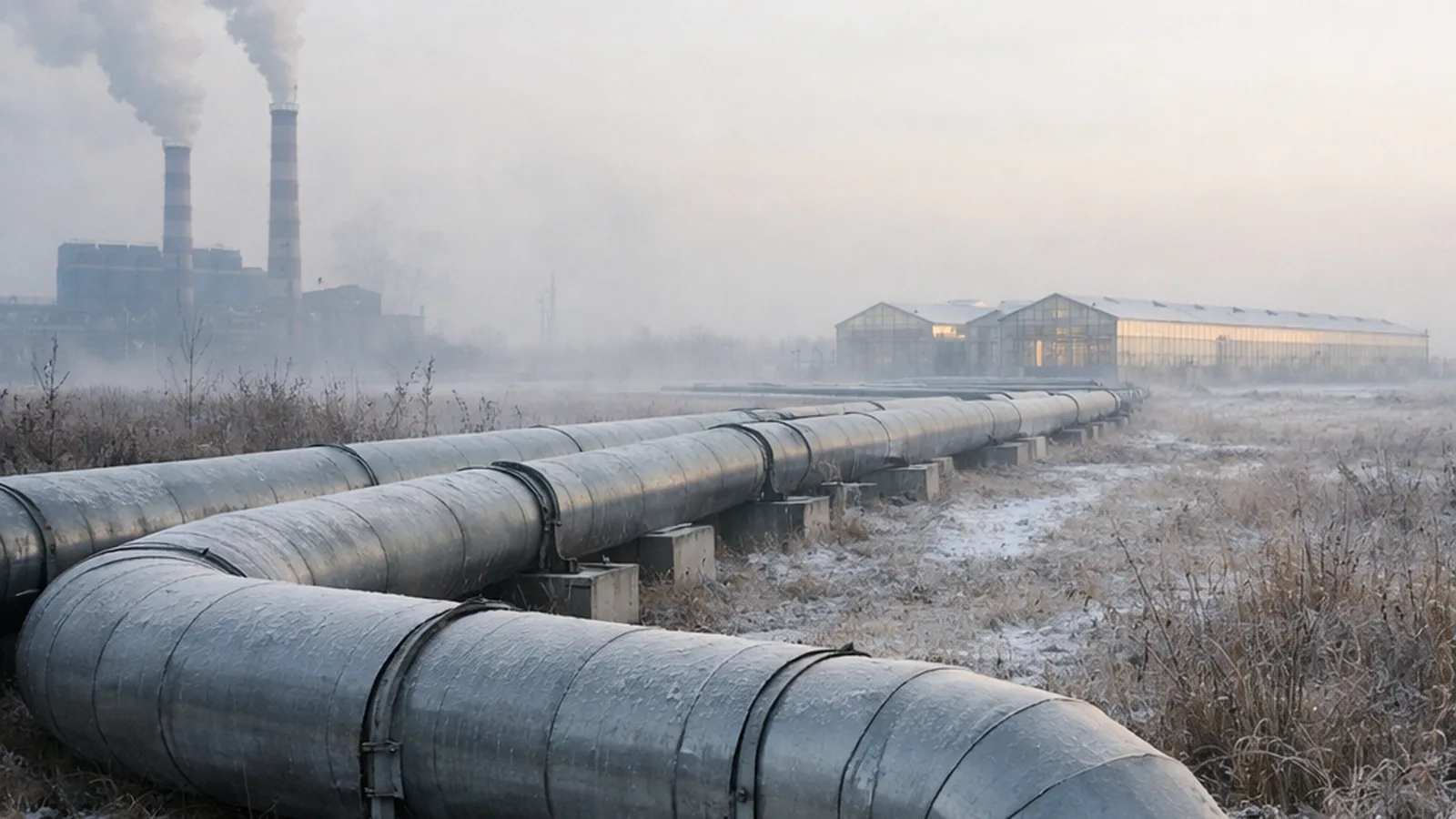
There is a law of physics that governs every power plant, every data center, and every greenhouse ever built, and it is not complicated. Energy never disappears; it only changes form, and every time it changes form, some of it slides into low-grade heat that is harder to use than what you started with. That is the second law of thermodynamics, and you can state the whole of it for our purposes in one sentence: energy runs downhill, from concentrated and useful to spread-out and lukewarm, and it never runs back up on its own. Once you internalize that, the design of an efficient campus stops being a matter of opinion. It is just a matter of following the energy down the hill and building something useful at every step it takes.
Let me walk the whole cascade, because the argument for co-location is hiding inside it.
Step one: gas becomes electricity — and heat
Start with natural gas. Burn it in a simple gas turbine and you convert only about a third to a bit over 40% of its chemical energy into electricity. The rest — nearly two-thirds — leaves as hot exhaust. A combined-cycle plant does better, catching some of that exhaust to spin a second, steam turbine and reaching 50–60% efficiency. But notice what “60% efficient” actually means: even the best gas plant in the world still turns roughly 40% of its fuel into heat it has no use for and throws into the sky. That is not a flaw in the machine. It is the second law doing its job. The heat is not going away; the only question is whether anything nearby wants it.
This is the insight behind combined heat and power, which has been around for over a century. If you capture that rejected heat and use it — instead of venting it — total fuel efficiency jumps from ~45% to north of 80%. Same fuel, same turbine, nearly double the useful output. The difference is entirely a matter of whether you built something next to the plant that could take the heat.
Step two: electricity becomes computation — which is to say, heat again
Now send that electricity to a data center. Here is the part most people never sit with: essentially 100% of the electricity a server consumes turns back into heat. Not most of it — effectively all of it. The computation itself carries away a vanishingly small fraction of the energy; the data traffic leaving the building accounts for less than a tenth of a percent. From a thermodynamic standpoint, a data center is a very expensive, very sophisticated electric heater that happens to do arithmetic on the way through. A one-megawatt server hall produces on the order of 8,700 megawatt-hours of heat a year, and today most operators spend still more energy and evaporate millions of gallons of water just to move that heat outside and get rid of it.
So follow the energy: gas turned into electricity threw off heat. Electricity turned into computing threw off more heat. We are two steps down the hill and we have already discarded, twice, the exact thing that a fourth-season crop is desperate for.
Step three: heat becomes food
A greenhouse in a northern winter is, in energy terms, a giant demand for low-grade heat and CO₂. It does not need the high-temperature flame of a furnace; it needs gentle, steady warmth in the range plants like — precisely the grade of heat that a power plant and a data center are trying to throw away. Waste heat is only waste if nothing next to it wants heat. Put the greenhouse next to the other two and the “waste” from steps one and two becomes the primary input to step three. The CO₂ that was an emission becomes plant food. The warm water that had to be cooled gets cooled by growing tomatoes instead of by evaporating a reservoir.
That is the whole trick, and it is not really a trick — it is just refusing to fight physics. Every conversion sheds heat; the second law guarantees it. The only choice a designer actually has is whether that shed heat lands on something useful or on the sky. Co-location is the decision to make it land on something useful.
Why distance is the enemy
There is a corollary, and it is about geography. Low-grade heat is the hardest form of energy to move — it leaks out of any pipe you put it in, so it is only valuable within a short distance of where it is made. Electricity travels better, but not for free: pushing it across the long-distance grid costs you around 5% to line losses before it arrives. CO₂ has to be compressed and piped. Every one of these losses is a tax you pay for putting the producer and the consumer in different places.
Co-location simply refuses to pay the tax. Heat that travels a hundred feet instead of a hundred miles arrives almost intact. Power that never enters the grid never loses the 5%. CO₂ that goes to the building next door does not need a pipeline network. The second law still takes its cut at every conversion — you cannot repeal physics — but you can stop volunteering additional losses on top of it by spreading the pieces across a map.
The efficiency is the business model
Add it up and the case for the integrated campus is not environmental first; it is thermodynamic first, and the economics follow the physics. A conventional build burns fuel at 40% efficiency, computes with it, and then spends more money to throw the heat away. An integrated campus burns the same fuel and harvests the heat twice on its way down the hill — once as electricity, once as warmth and CO₂ for crops — approaching the 80%-plus total efficiency that combined heat and power has proven for a hundred years, and skipping the transmission and cooling losses that a spread-out design pays without thinking.
My grandfather could not have written the equations, but he understood the principle completely: you do not throw away half your crop and call it done. Thermodynamics is just that same discipline, written in the language of energy. The heat is going to be produced no matter what — the second law insists on it. The only question worth asking is the oldest question on any farm: what is standing next to it that needs it? Build so the answer is always “something,” and you have built the most efficient thing physics will allow.