The World Runs on Energy and Data
Energy and information were always civilization's two flows. AI is fusing them into one — so we should build them on the same ground.
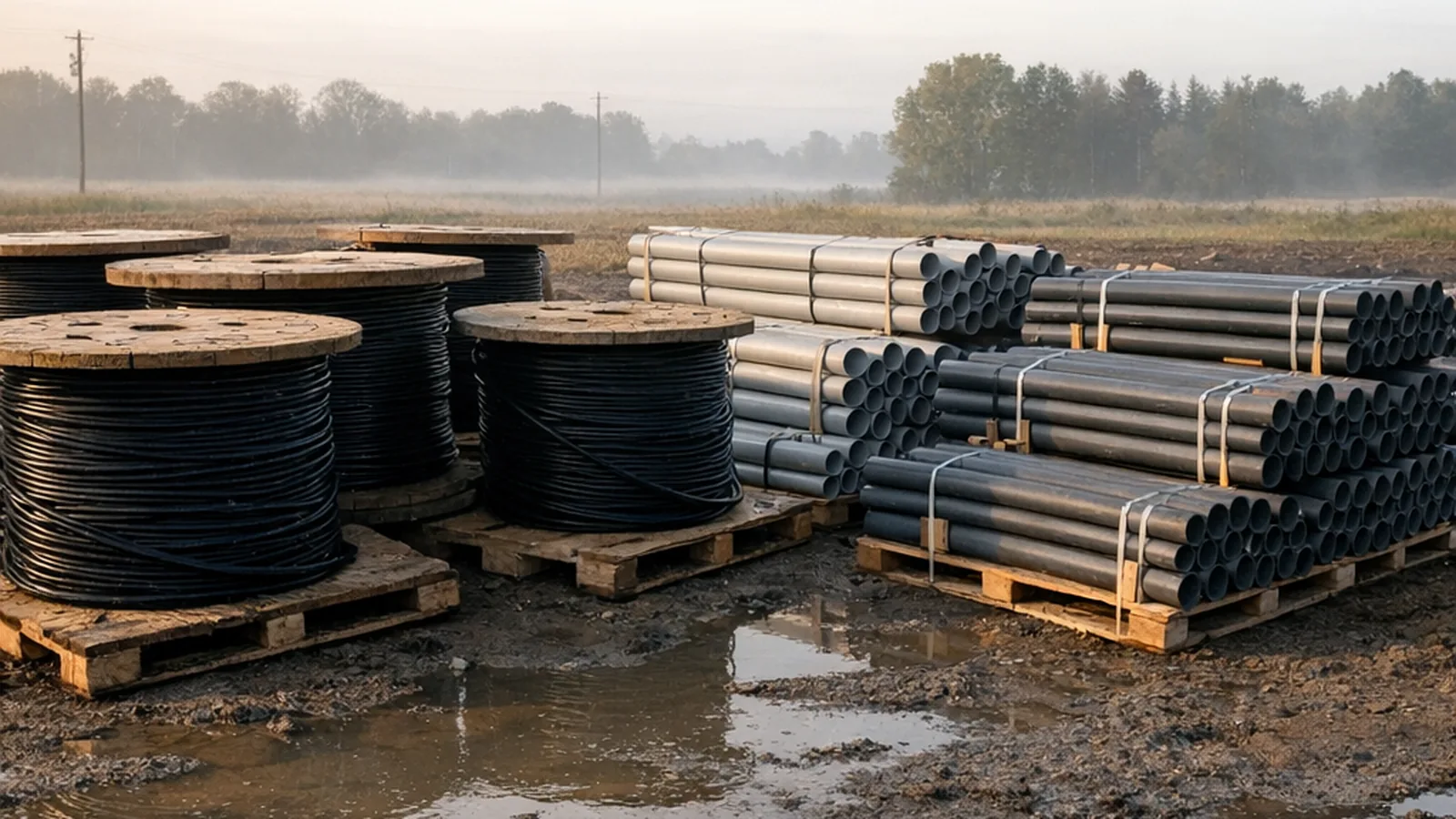
Strip any civilization down to its foundations — past the money, past the politics, past the technology of the moment — and you are left with two flows running underneath everything else. One is energy: the capacity to do work, to move, to heat, to grow, to build. The other is information: the capacity to know, to coordinate, to decide, to remember. Everything a society does is some combination of the two. A farm is energy (sunlight, fuel, labor) organized by information (when to plant, where the water goes, what the weather will do). A city is energy (power, transport, heat) organized by information (logistics, markets, law). Life itself is the same trick at the smallest scale — a cell is chemistry running on energy, directed by the information coiled in its DNA. The world has always run on energy and data. What is new, and what almost no one has fully absorbed, is that the two have started to merge into a single industrial process.
Energy is the master resource
Energy comes first because everything physical is energy wearing a costume. Food is energy your body can eat. Movement is energy spent against friction and gravity. Steel, concrete, fertilizer, clean water, a warm house in January — every one of them is energy converted into a form you can use. This is why energy has always been the master resource: the amount a society can command, and how cheaply, sets the ceiling on everything else it can do. The great leaps in human history are, underneath, energy leaps — fire, the plow, coal, oil, the electric grid. Give people more usable energy and they get richer, healthier, and more capable, almost mechanically. Take it away and everything contracts at once. There is no such thing as a poor society with abundant cheap energy, and no such thing as a rich one without it.
Data is the new one — and it just got physical
Information is the second flow, and for most of history it was cheap and light. A decision, a ledger, a message — these took almost no energy to make or move. That is exactly what has changed. We built machines that think in bulk, and thinking in bulk turns out to be enormously physical. An AI model is not an idea floating in the cloud; it is billions of arithmetic operations grinding through silicon, and every one of those operations is paid for in electricity and cooled with water. A data center is, at bottom, a machine that converts electrical energy into information — into prediction, into intelligence — the way a power plant converts fuel into electricity. Intelligence has become an industrial output with an energy bill, produced in buildings, on land, drawing power, throwing off heat.
For the first time in history, thinking has an energy cost you can meter — and it is enormous.
That is the merger. Energy and data were always the two substrates of civilization, but they ran on separate tracks — one heavy and physical, one light and abstract. Artificial intelligence fuses them. Compute is now the process of turning energy directly into intelligence, at scale, as a commodity. Which means the old abstract flow — information — now obeys the hard rules of the physical one. It needs power. It needs land. It needs water. It needs to get rid of heat. The nervous system of the modern economy has grown a body, and that body has to be fed.
The numbers make it unavoidable
This is not a metaphor stretched for effect; it is showing up on the grid. Data centers already consumed on the order of 4% of U.S. electricity in 2023, and DOE and Lawrence Berkeley National Laboratory estimate that could reach 6.7% to 12% by 2028. The International Energy Agency projects that global data-center electricity use will more than double by 2030, to roughly 945 terawatt-hours — comparable to the entire electricity consumption of a large industrial nation, added in a handful of years. To serve it, the U.S. may need on the order of 100 gigawatts of new generation this decade, largely for compute. Read those numbers plainly and the conclusion is inescapable: the growth of intelligence is now a question of power. AI is no longer bottlenecked by algorithms or even by chips. It is bottlenecked by energy and the physical infrastructure that delivers it.
So the defining contest of the next economy is not really about who has the best model. Models will come and go; they leapfrog each other every year. The durable question is who can convert energy into data at the largest scale, the lowest cost, and the fewest losses — because that conversion is the new bottleneck, and whoever owns the machinery of it owns the layer everything else runs on. That is a fight about power plants, land, water, and grid access. It is an infrastructure fight wearing a software costume.
Two flows, built as one — plus a third
Here is where most of the world is about to make an expensive mistake. Because energy and data grew up on separate tracks, we still build them on separate tracks — generate power in one place, compute in another, and pay in losses and conflict for the distance between them. We treat the merger as if it hadn’t happened. The efficient response to two flows becoming one machine is to build them as one machine: generate the power on the same ground where it becomes data, behind the meter, so the electricity never crosses the grid and never loses a mile to transmission. Put the conversion in one place and most of the waste and friction simply disappears.
And once the two flows are co-located, a third one falls out for free — the oldest one of all. Turning energy into data throws off enormous heat and CO₂ as byproducts, and the original energy-into-life converter, agriculture, is desperate for exactly those things. A greenhouse is a machine that turns heat, light, power, and CO₂ into food. So the same campus that converts energy into intelligence can, with nothing more than good design, also convert its own waste into nourishment. Energy becomes data; the data machine’s exhaust becomes food; almost nothing leaves the fence line. That is the EnergiAcres thesis in one line — build at the point where energy becomes data, do it efficiently and in one place, and let the leftovers feed people.
Build the machine well
I am a farmer by inheritance and a technologist by trade, and this is the rare idea that looks the same from both ends of my life. My family’s work has always been the management of two flows: the energy of sun and fuel and soil, and the information of knowing what to do with them, season after season. The frontier of technology, it turns out, is the same two flows — just larger, faster, and finally colliding into a single industrial process. The world has always run on energy and data. From here on, it will increasingly run on the machines that turn one into the other. We are going to build an enormous number of those machines in the next decade. The only question worth arguing about is whether we build them wastefully and far apart, at war with the places that host them — or efficiently, in one place, generous with their surplus, so that the infrastructure of intelligence also leaves the world a little better fed, a little better powered, and a little better off. That is the machine worth building. It is the one we are building.