Keeping the Wells Running
How a problem in our family's oil business became my first company — and the through-line from an Ohio farm to the frontier of energy and AI.
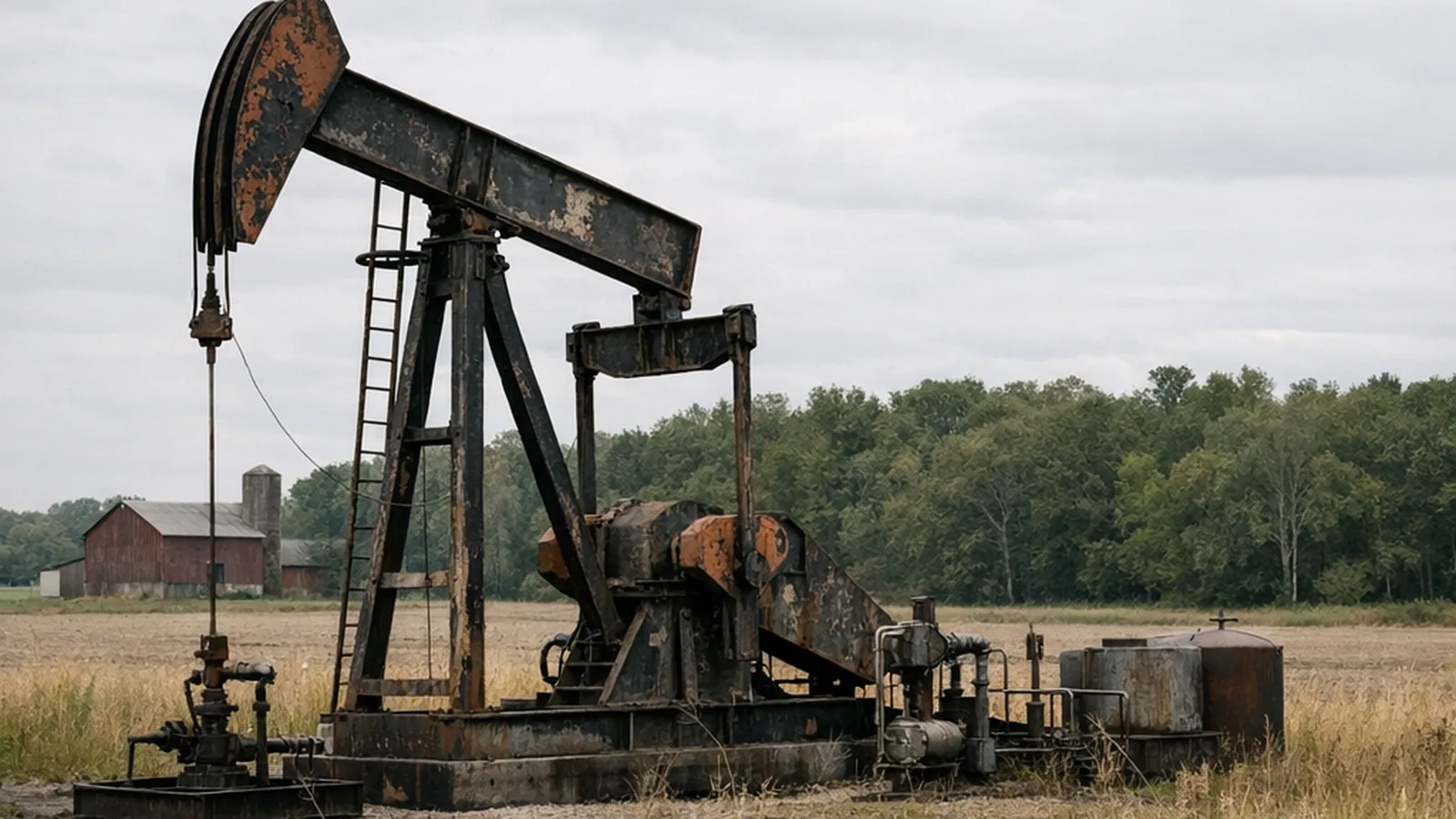
I grew up on a sixth-generation Ohio farm, where nothing gets wasted and the trough has to be full before you sleep. That’s not a slogan — it’s how you survive a place where the animals don’t care about your reasons. They care that the work got done. I learned to think in systems before I had a word for it.
Then, at ten, an ATV accident nearly took my leg and my life. Forty surgeries and a long recovery later, I’d been handed a strange gift: time beside my father, learning the oil and gas business across northeast Ohio. I checked wells. I watched how a field actually runs. And I fell hard for technology — enough to go dual-major in philosophy and computer science, because I wanted to both question the assumptions and build the thing.
Those two worlds — the field and the code — collided in a very ordinary problem.
The problem was ours first
Our wells generated data the way every oil and gas operation does: on paper, by hand, one site visit at a time. Production numbers. Equipment status. Safety and environmental checks. If you want to keep wells running — and keeping wells running is how you make money — you have to see what’s happening in the field and act fast. We were doing it the slow, drive-to-every-location way.
So I built software to fix it: capture field data where the work happens, monitor wells and equipment remotely (SCADA), and keep the safety and environmental side honest. I built it to solve our problem.
Then I looked up and realized every operator in the patch had the exact same pain.
Fielding Systems
That became Fielding Systems — my first company, founded in 2010, right as the shale boom was rewriting American energy. Field data capture, remote monitoring, production reporting, safety and environmental compliance. The unglamorous plumbing that decides whether a well makes money or bleeds it.
I bootstrapped it. No venture capital, no safety net — just a real problem, software that solved it, and operators who needed it. I built it the way I learned to do everything on the farm: on the job, one honest improvement at a time, until it worked repeatably.
It worked well enough to reach the top of the industry.
Quorum, and the people I kept
In 2015, Fielding was acquired by Quorum Software — then backed by Silver Lake, and later by Thoma Bravo. I joined Quorum’s senior leadership and helped connect field data to the rest of the energy value chain.
The exit mattered. But it’s not the part I carry.
What I carry is the people — the engineers who stayed up with me, the operators who trusted a farm kid with their production data, the leaders who showed me how big software really gets built. I walked out of that chapter with relationships that will last the rest of my life. That’s the real return on a company. Not the multiple. The people.
Same instinct, bigger loop
Everything I’m building now runs on that same instinct. EnergiAcres pairs energy and AI with food and community — because I still can’t stand to watch anything get wasted, least of all the heat, water, and CO₂ pouring off a data center. Terrasow puts practical intelligence in the hands of farmers and land stewards.
Farm to oil patch to software to energy and food. Different decades, same person: solve the real problem in front of you, waste nothing, and keep the people who show up beside you.
That’s who I am.
The full arc is on the timeline.