Build Boring
A sixth-generation farmer on why the durable, unglamorous infrastructure beneath AI — power, heat, water, land — is the real opportunity of the era.
I am a sixth-generation farmer. Six generations means my family has worked the same kind of ground for the better part of two centuries — through wars, droughts, depressions, and every new technology that was supposed to change everything. Farming teaches a particular kind of patience. You do not plant for this quarter. You plant for a season you will see, and you build for seasons you never will. The fence line you straighten, the tile you lay to drain a field, the barn you raise — those are decisions a great-great-grandchild inherits. Farmers think in generations because the land makes you.
I have spent the other half of my life in technology — in AI, energy, cloud, and computing. And the longer I work at the seam where those two worlds meet, the more convinced I am of something that sounds almost backward in an age obsessed with the new: the biggest opportunity in front of us is not the flashy layer. It is the boring one. It is infrastructure. And the chance to build it right is the kind that comes along once in a generation — and shapes the next six.
Boring is the point
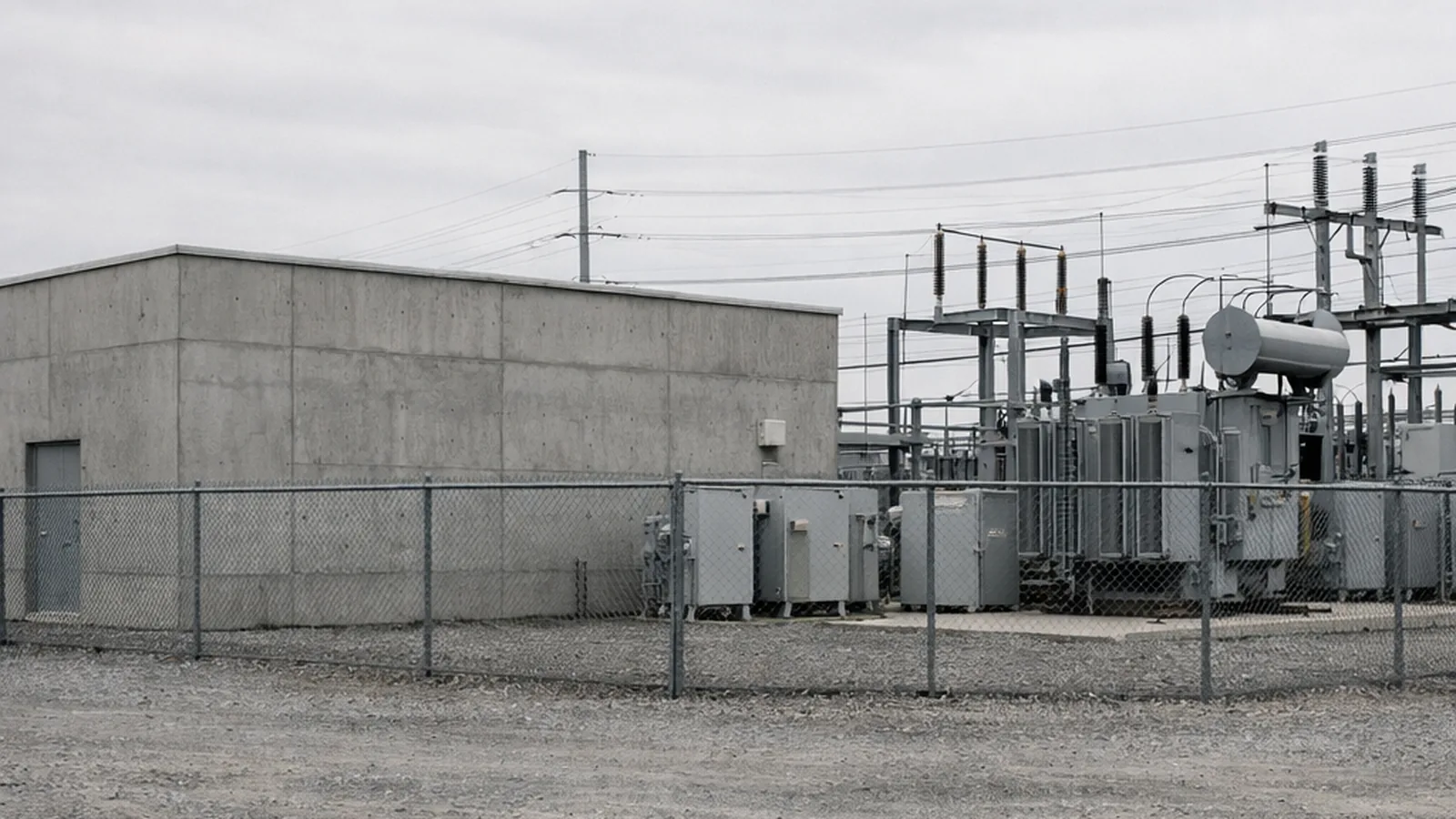
The exciting things get the headlines — the models, the chips, the breakthroughs. But none of it runs without the boring layer underneath: power, pipes, heat, water, land, the physical plant that turns electricity into something useful and keeps it running for thirty years. We are about to build more of that boring layer than we have in a lifetime. After nearly two decades of flat demand, American electricity use is climbing again, and the load from data centers alone is on track to more than double by 2030. The country needs an enormous amount of new power and computing capacity, and it needs it fast.
Here is the thing about boring: boring is durable. Boring is financeable. Boring lasts. A clever app is obsolete in three years; a well-built power-and-water campus serves for thirty or fifty. The fortunes that endure are rarely made on the shiny thing — they are made on the unglamorous thing that everything else depends on. Railroads were boring. The grid was boring. Pipelines were boring. They also remade the country and paid for a century. We are at one of those moments again. The question is not whether the boring infrastructure gets built — it will. The question is whether we build it well, or the way we built the last wave: wastefully, in the wrong places, at war with the towns that host it.
Use all the energy
Start with the most basic farm value there is: do not waste anything. A farmer who throws away half his crop does not farm for six generations. Yet that is precisely how we build energy infrastructure today. A power plant turns natural gas into electricity and throws away nearly half the energy as heat, straight into the sky. A data center takes that electricity and converts almost all of it back into heat — and throws that away too, often evaporating millions of gallons of water to do it. Then we push power across hundreds of miles of wire and lose a slice of it to the distance.
The efficient answer is not complicated: use all the energy, on-site, where you make it. Generate the power behind the meter, next to the thing that needs it, so it never enters the grid and never loses a mile to transmission. Then capture what would have been wasted — the heat, the carbon dioxide, even the water — and put it to work right there. Waste heat is only waste if there is nothing next to it that wants heat. Put a greenhouse next door and that same heat grows food all winter. The CO₂ from the plant feeds the plants. The water runs in a closed loop instead of into the air. Efficiency is not a sustainability slogan; it is the oldest farm discipline there is, applied to the newest industry — the difference between a project that extracts and one that compounds.
Put it in one place
And here is the call I keep coming back to: keep it simple. The most powerful idea in all of this is also the least glamorous — put the things that need each other in the same place. Next to each other. That is it.
We have made modern infrastructure absurdly complicated. We generate power in one place and consume it hundreds of miles away. We capture carbon here and try to ship it there. We grow food in California and truck it to Ohio. Every mile is a cost, a loss, a thing that can break. Complexity is the enemy of anything you want to last.
Co-location erases the distance. When the power plant, the data center, and the greenhouse sit on the same ground, the heat does not have to travel — it is next door. The power does not cross the grid — it is behind the fence. The carbon does not need a pipeline — it goes to the building beside it. Nothing has to be invented; the parts already exist. The only move is to put them in the same spot and let them feed each other. Simple is cheaper to build. Simple is more reliable to run. Simple is what survives six generations of people who did not write the original plan. The best infrastructure is not the cleverest — it is the one with the fewest moving parts and the shortest distances. Put it in one place, and most of the complexity simply disappears.
Nothing is waste — and leave the grid a little better
On a farm, nothing is truly waste. The manure feeds the field; the stalks feed the soil; the runoff is a problem only if you let it run off. The same is true here. Waste-to-energy is just the discipline of looking at a byproduct and asking: what is next to it that needs this? Heat is waste to a server and fuel to a tomato. CO₂ is an emission to a plant and a nutrient to a crop. Water is a loss if it evaporates and an asset if it recirculates. A well-designed campus turns every output into the next input, on-site, until very little leaves the fence line at all.
And then there is the surplus. A campus that makes its own power does not always need every watt — and what it does not need, it can send back. Not to power a region; these are not utilities. But a behind-the-meter campus can put a little back onto the local grid — enough to add a bit of capacity and help hold local rates down, instead of driving them up the way new demand usually does. That matters more than it sounds. Seventy-one percent of Americans now say they do not want an AI data center built near them, and rising electricity bills are a big part of why. A project that eases local rates instead of raising them is the difference between one that only takes from a community and one that leaves it a little better powered than it found it. Boring infrastructure, done right, is a good neighbor.
For the next six generations
This is the opportunity of a generation, and I do not mean that as a figure of speech. The decisions we make in the next few years about how to build the power-and-compute layer of the American economy will be standing long after every model we are excited about today has been forgotten. We can build it the loud way — extractive, wasteful, sprawling, fighting the towns it lands in — or we can build it the boring way: efficient, co-located, simple, generous with its surplus, designed so that nothing is wasted and everything sits next to the thing it serves.
I think about this the way I think about the farm. I inherited ground that people I never met cleared, drained, and fenced generations ago, and I am obligated to leave it better for people I will never meet. Infrastructure is the same kind of inheritance. We are not really building data centers. We are building the boring, durable, efficient base layer that the next six generations will stand on — their power, their food, their water, the ground under their economy. That is worth building well. That is worth building boring. And it is the best chance any of us will get to do something that outlives us.